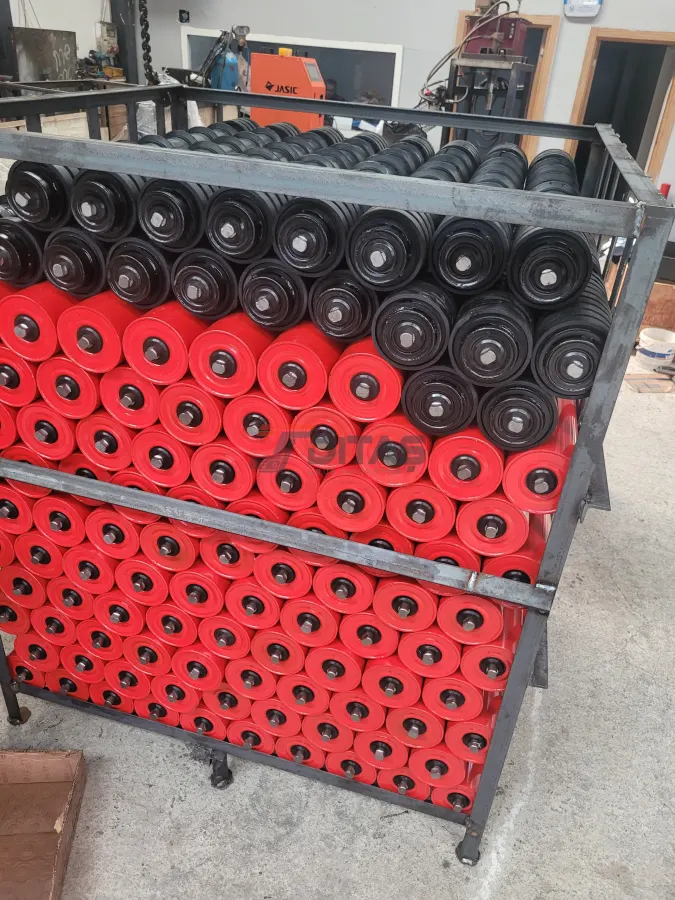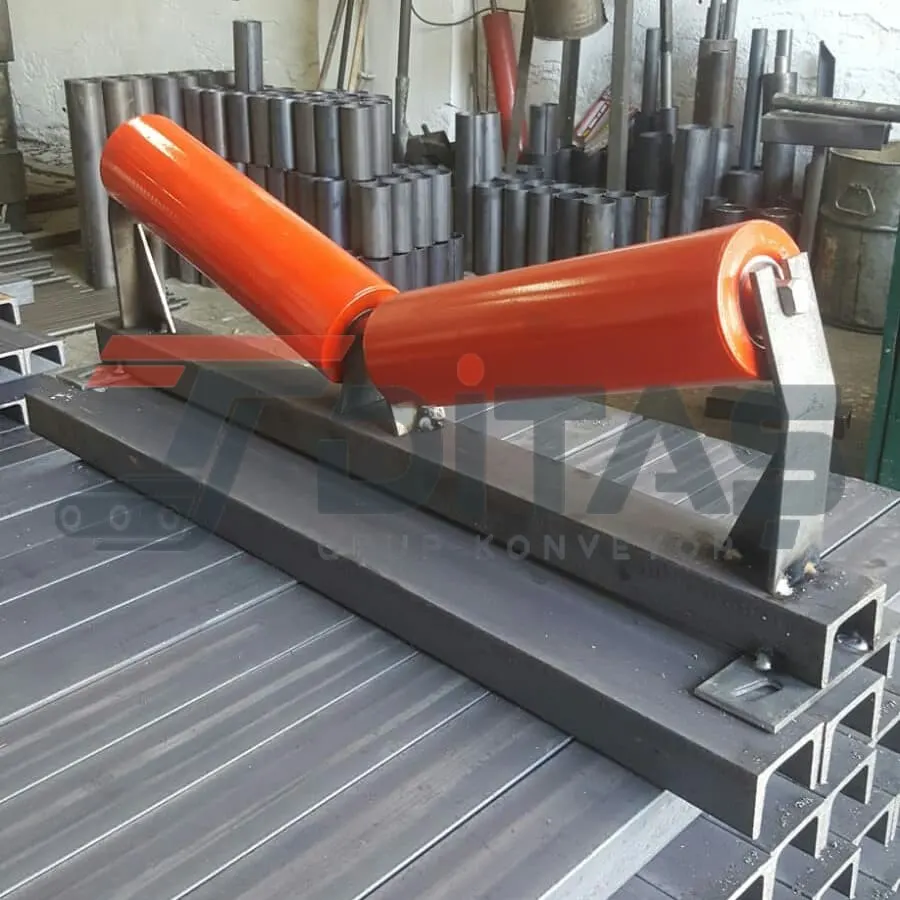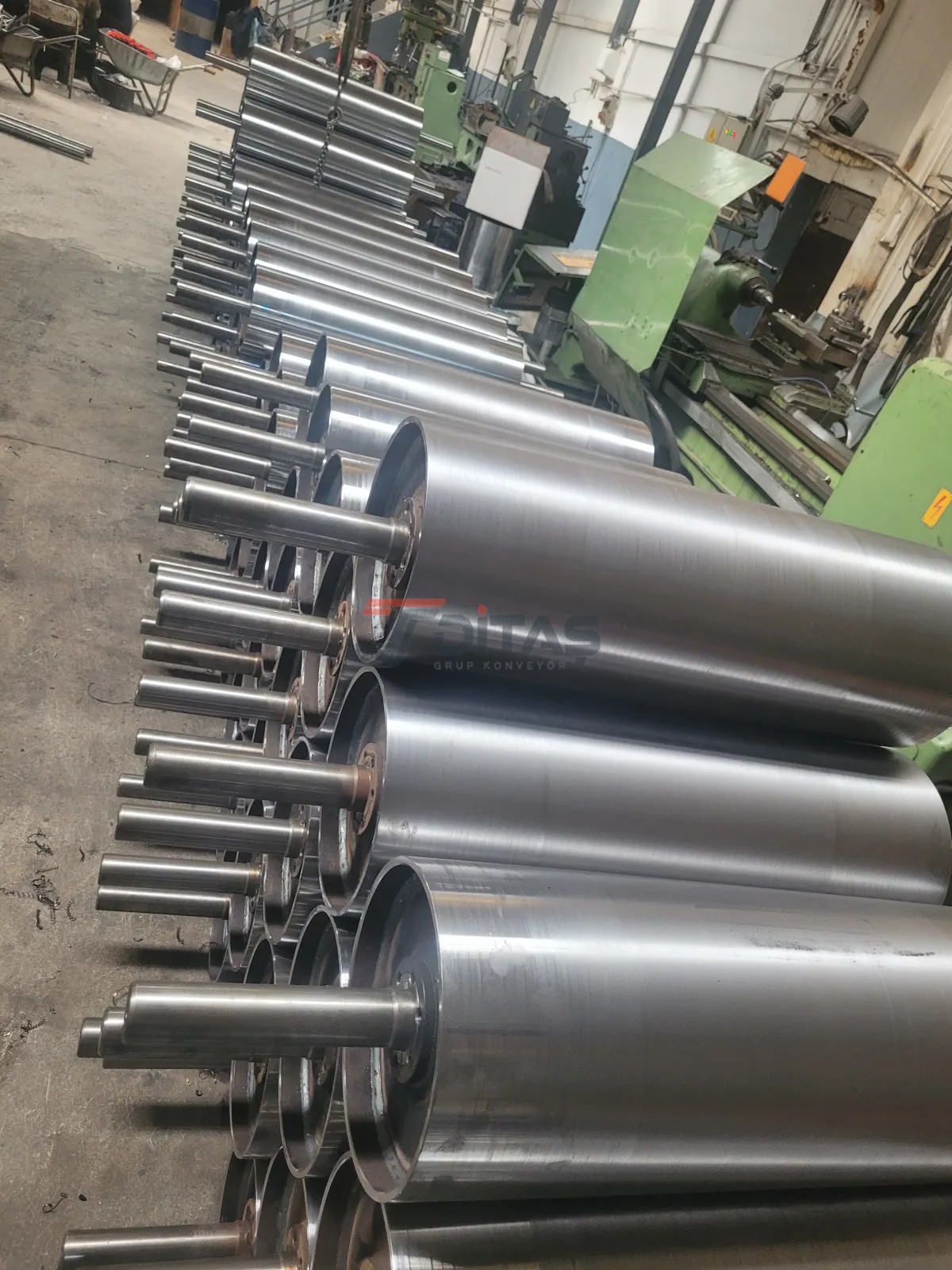
A wrongly chosen roller fails early and shortens belt life. These 7 steps help you choose correctly for a new conveyor or when replacing rollers on an existing line.
1. Define the belt width
Belt width sets roller length and the number of rollers per station. For example, a 3-roll troughing idler for an 800 mm belt typically uses 315 mm rollers.
2. Describe the material
Bulk density, lump size, moisture and abrasiveness influence roller diameter, wall thickness and finish.
3. Check capacity and belt speed
Higher belt speeds raise roller rpm; a larger diameter extends bearing life.
4. Check idler spacing
Carrying idlers are usually spaced 1.0–1.5 m apart and return idlers 2.5–3.0 m. Wider spacing means more load per roller.
5. Select shaft and bearings
Shaft diameter and bearing series (6204, 6305, 6308…) are chosen from the load per roller and target life.
6. Consider the environment
Dusty, wet or corrosive sites call for multi-labyrinth seals, galvanising or rubber lagging.
7. Confirm standards and mounting
To fit existing frames, verify the shaft-end spanner flat size and overall length, and whether DIN 15207, ISO 1537 or CEMA series is used.
Send us your dimensions or a photo of your old roller — our engineers will recommend the right roller free of charge.