The conveyor belt is the flexible, endless surface that carries material on a belt conveyor. Choosing the right belt directly affects capacity, energy use and maintenance costs.
Belt construction
A belt consists of a carcass (textile plies or steel cords) that carries the tensile load and top and bottom rubber covers that protect it.
Belt types
- Textile (EP) belts: polyester-polyamide plies for general use.
- Steel-cord belts: for long, high-tension conveyors.
- Heat-, oil- and fire-resistant belts: for special conditions.
- Chevron belts: for inclined conveying.
Matching belt and rollers
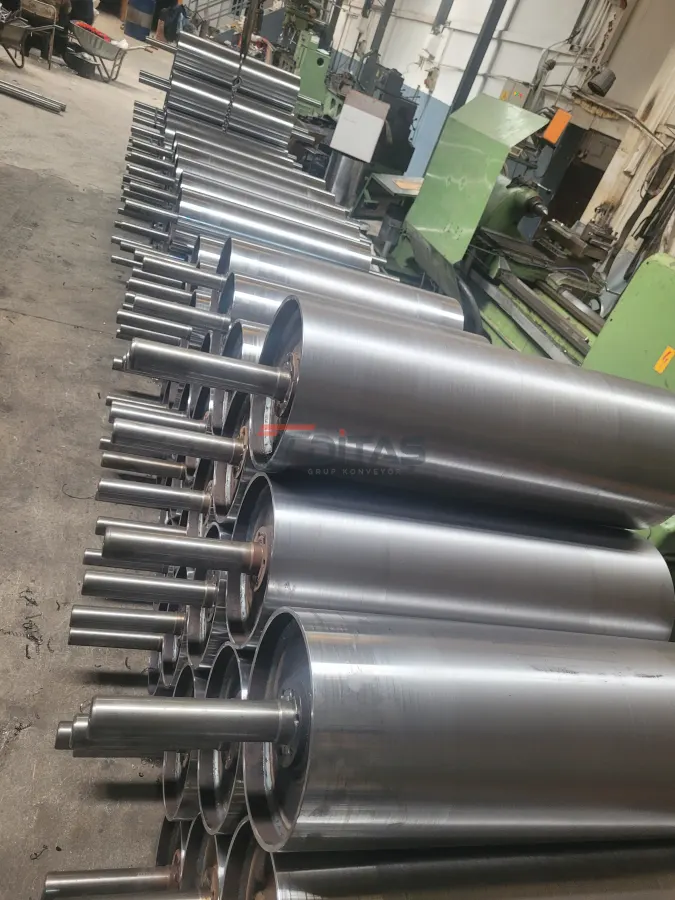
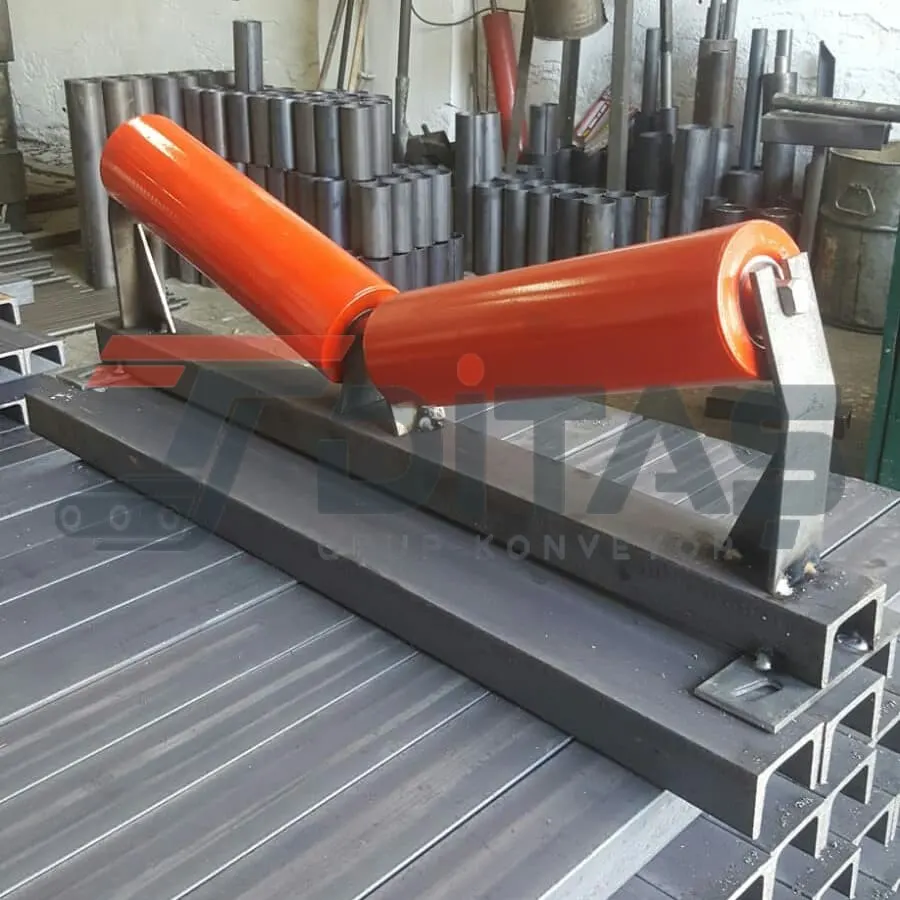
Belt width determines roller length, idler frame size and pulley face width; belt thickness and ply count set the minimum pulley diameter. When changing a belt, make sure rollers, frames and pulleys are compatible.
Extending belt life
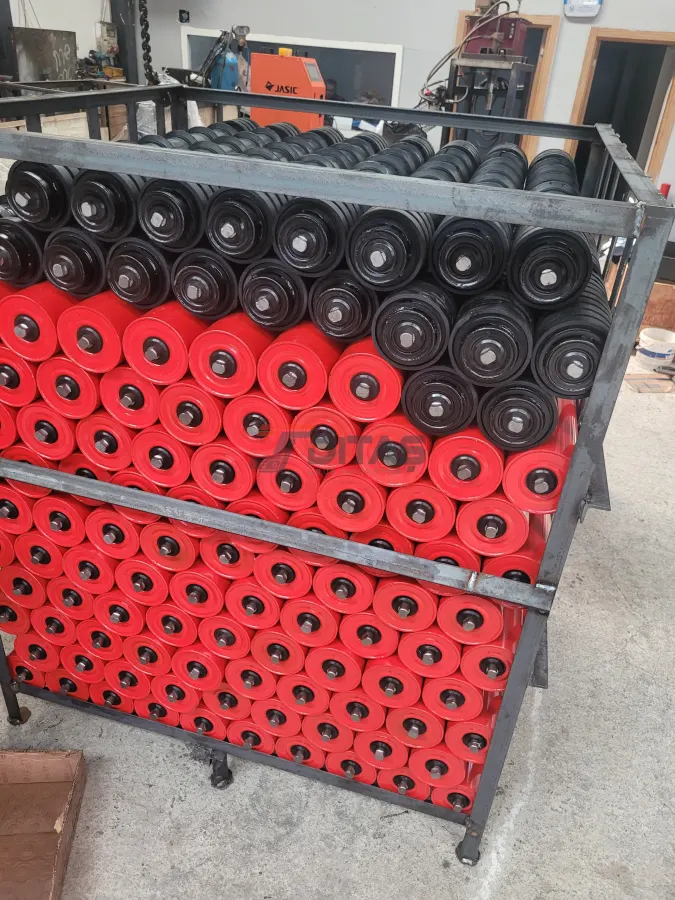
- Use impact rollers and impact idlers at loading points.
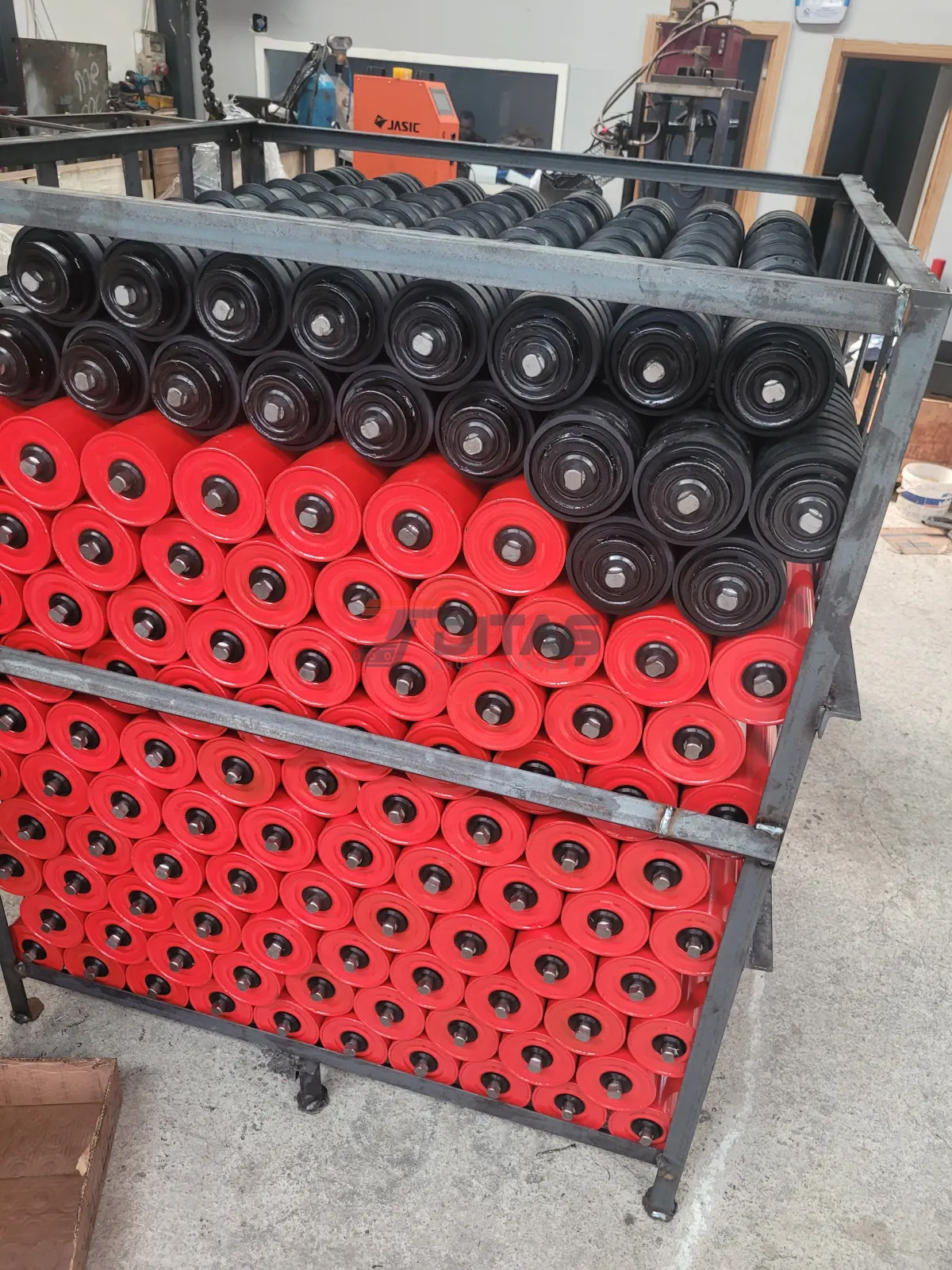
- Use rubber-disc or spiral rollers on the return side to prevent build-up.
- Control mistracking with self-aligning idlers.
- Replace seized rollers without delay.